Thinking on Scripture with Dr. Steven R. Cook
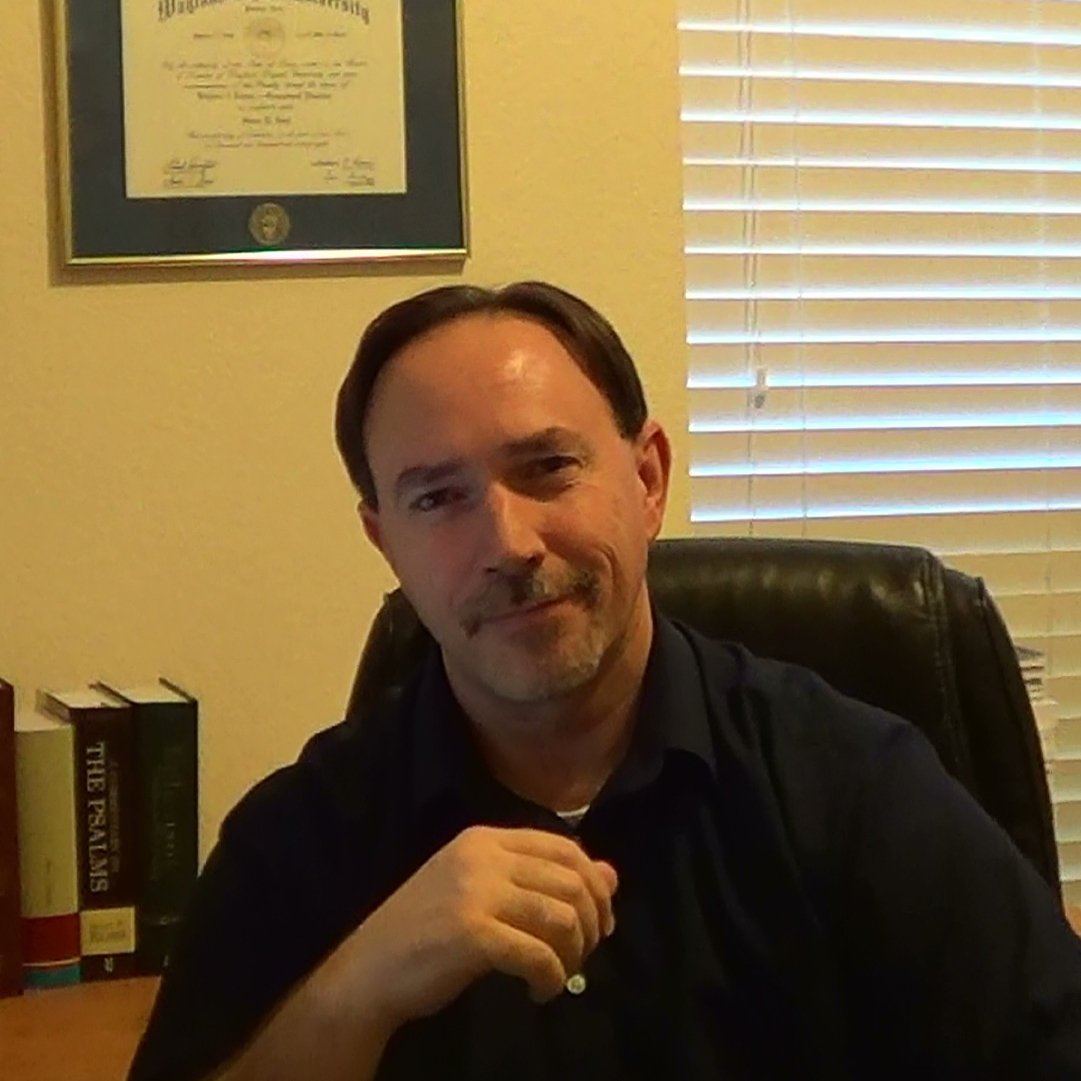
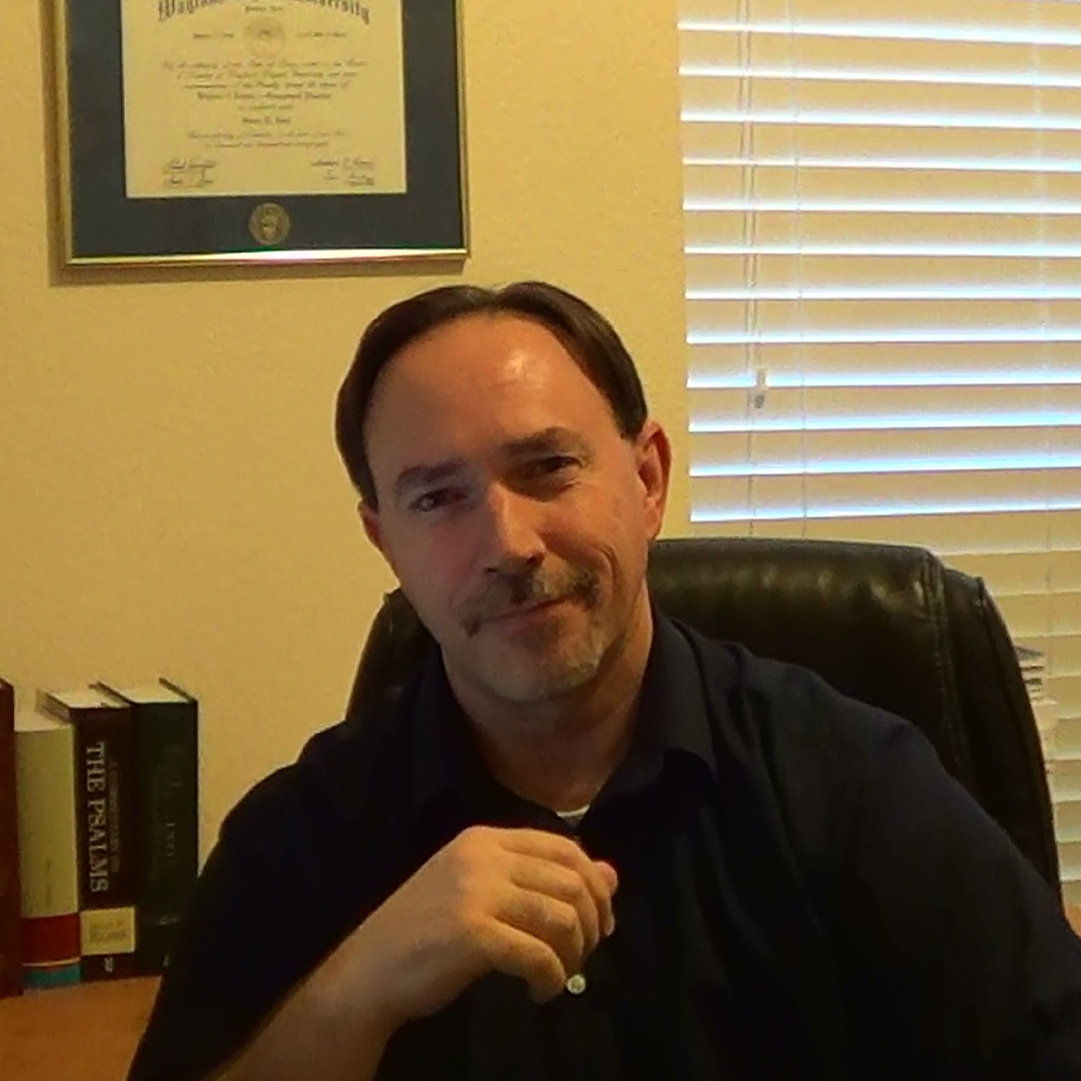
Dr. Steven R. Cook is the founder of Thinking on Scripture, a platform that has attracted over one million visitors. Steven is a Christian educator who has taught undergraduate theology at Tyndale Theological Seminary and recently joined the faculty of Chafer Theological Seminary. He is a Protestant, traditional dispensationalist, and a traditional Free Grace Bible teacher. His studies in the original languages of Scripture, ancient history, and systematic theology have been the foundation for his teaching and writing ministry. Steven has written several Christian books, dozens of articles on Christian theology, and recorded more than fifteen hundred hours of audio and video messages. He hosts a weekly Bible study at his home in Arlington, Texas, where he records most of the Bible lessons for his podcast and YouTube channel. Steven’s ministry activity is freelance and entirely voluntary, and he appreciates donations to help with ministry expenses. Since 2004, he has served as a full-time Case Manager with a local nonprofit agency dedicated to assisting poor, elderly, and disabled members of the community.










Episodes

Apr 2, 2014
Apr 2, 2014
44 min
The Biblical worldview accepts the veracity of God's Word as it addresses matters such as the eternal existence of God, the origin of the universe, angels, mankind, sin, evil, the substitutionary death of Christ, His Second Coming, and so on. The Christian who wants to live in proper relationship with God learns to perceive all of life from the biblical perspective and to align all his actions in conformity with God's Word. God's glory is the chief end of any health Christian worldview.
Apr 2, 2014
Apr 2, 2014
45 min
The Biblical worldview accepts the veracity of God's Word as it addresses matters such as the eternal existence of God, the origin of the universe, angels, mankind, sin, evil, the substitutionary death of Christ, His Second Coming, and so on. The Christian who wants to live in proper relationship with God learns to perceive all of life from the biblical perspective and to align all his actions in conformity with God's Word. God's glory is the chief end of any health Christian worldview.
Mar 13, 2014
Mar 13, 2014
14 min
Moses prays for God not to destroy His people, Israel, after they break covenant with Him and build a golden calf and worship it (Ex. 32:1-14).
Mar 13, 2014
Mar 13, 2014
45 min
A covenant is a legal
contract between two people. In the
Bible there are numerous covenants: 1) the Edenic Covenant
(Gen. 1:26-31; 2:16-17; cf. Hos. 6:7 = bilateral), 2) the Adamic Covenant
(Gen. 3:16-19; cf. Hos. 6:7 = unilateral), 3) the Noahic Covenant (Gen. 6:18; 9:1-18 =
unilateral), 4) the Abrahamic Covenant (Gen. 12:1-4; 13:14-17;
15:1-7; 17:1-11; cf. Gen. 26:2-5; 28:10-15; Ex. 2:24; 3:6-8; Josh. 1:2-6; 2 Ki.
13:23; 1 Chron. 16:15-22; Ps. 105:3-15; Neh. 9:5-10 = unilateral), 5) the Mosaic Covenant (Exodus 19:5, 8; 20:1-31:18; Deut.
4:13; Gal. 3:16-19 = bilateral), 6) the Palestinian/Land Covenant (Deut. 30:1-10 =
unilateral), 7) the Davidic Covenant (2 Sam. 7:4-16; 1 Chron.
17:3-15 = unilateral), and 8) the New Covenant (Jer. 31:31-34; 32:37-41; Ezek.
37:21-28; 2 Cor. 3:6 = unilateral).
Mar 12, 2014
Mar 12, 2014
41 min
The Church—both universal and
local—is a company of believers formed from Jews and Gentiles who have been
united with Christ by means of the baptism of the Holy Spirit at the moment of
salvation (1 Cor. 12:13; Gal. 3:26-28). A person becomes a member of the
body of Christ—the church—when he believes in Christ for salvation (Gal.
3:26-28; Eph. 1:22-23). The church was not known in the OT, but was
revealed to the apostles in the New Testament (Eph. 3:1-12; 5:32; Col.
1:25-27).
Mar 1, 2014
Mar 1, 2014
35 min
Steven provides introductory information for the book of Acts such as authorship, audience, date of writing, literary genre, theological importance, and purpose.
Mar 1, 2014
Mar 1, 2014
46 min
The Central Idea of
the Text is that Jesus appeared to His disciples numerous times over a
forty day period, and His final instructions were for them to remain in
Jerusalem for the special coming of the Holy Spirit so they would be empowered
to serve Him as His witnesses throughout the world (Acts 1:2-8; cf. Acts
10:38-42; 13:26-32, 38-39).
Mar 1, 2014
Mar 1, 2014
42 min
The Central Idea of
the Text is that the apostles returned to Jerusalem as the Lord commanded,
and then chose another apostle to replace Judas.
Mar 1, 2014
Mar 1, 2014
42 min
The Central Idea of the Text is that God poured forth His
Holy Spirit on the Day of Pentecost just as He promised, and the church was
born (Matt. 16:18; John 14:16-17; 16:7, 13; Acts 1:4-5). In Acts 2 the church was purely Jewish, but
Acts 8, 10 and 15 will reveal that Gentiles will have an equal place in the
body of Christ (cf. 1 Cor. 10:32; Gal. 3:26-28).
Mar 1, 2014
Mar 1, 2014
44 min
The
Central Idea of the Text is that
Peter gives an account of the outpouring of the Holy Spirit, showing its
similarity with what was spoken by the prophet Joel (Joel 2:28-32).
Mar 1, 2014
Mar 1, 2014
48 min
The Central Idea of
the Text is that many Israelites responded to Peter’s message about Jesus
and changed their mind (i.e. repented) about their sinful rejection and
crucifixion of Him and believed on Him as the Messiah and were baptized in water
as a public expression of their faith.
Mar 1, 2014
Mar 1, 2014
51 min
About
three thousand people believed in Christ as their Savior as a result of Peter’s
preaching. They began devoting themselves to: 1) the apostle’s teaching, 2)
fellowship, 3) the breaking of bread (i.e. the Lord’s Supper), and 4) prayer
(Acts 2:42). They were sharing their
material goods and helping each other as needed, and were meeting and sharing
meals “from house to house” (Acts 2:44-46).
It is important to realize that what we read in Acts is descriptive and not
prescriptive. As an historian, Luke
reveals what happened in the early church, but does not prescribe it as a model
to be forced upon churches everywhere.
Mar 1, 2014
Mar 1, 2014
48 min
The Central Idea of the Text is that Peter
and John healed a lame man for the purpose of drawing attention to Christ so
others might turn to Him for salvation. The
healing was instantaneous. Since the
lame man had never known how to walk, the miracle related to the mind as well
as the body. There are cases in Scripture
where God did not heal people and used sickness to His advantage (2 Cor. 12:7-10; Phil. 2:25-30; 2 Tim. 4:20;
cf. 1 Sam. 16:14-16; 2 Ki. 13:14; 1 Cor. 5:5; 11:27-30). In one instance, Paul advocated for a natural
solution to an illness (1 Tim. 5:23).
Mar 1, 2014
Mar 1, 2014
49 min
The Central Idea of
the Text is that Peter and John are arrested and placed on trial before the
religious leaders of Israel, specifically the Sadducees, for their healing of
the lame man and their preaching the resurrection of Jesus (Acts 5:1-4, 8-10). About
5000 respond positively to Christ and are saved, but a few leaders are negative
and cause suffering.
Feb 2, 2014
Feb 2, 2014
47 min
The Central Idea of the Text is that Peter and John spoke the Word of
God with boldness in spite of the threats of persecution that came from the
leadership of Israel (Acts 4:13-20).
Feb 2, 2014
Feb 2, 2014
43 min
The Central Idea of
the Text is that God judged and disciplined Ananias & Sapphira for
their carnal hypocrisy (Acts 5:1-11), and continued to work through His
apostles to spread the gospel message (Acts 5:12-16).
Feb 2, 2014
Feb 2, 2014
44 min
The Central
Idea of the Text is that the Apostles were faithful to the Lord Jesus to
obey His command to preach His message (Matt. 28:19-20; Acts 1:8; 5:20, 29,
42), even though they faced resistance and persecution for doing so (Acts 5:28,
40).
Feb 2, 2014
Feb 2, 2014
38 min
The Central Idea of the Text is that a
problem arose within the church that threatened the teaching and preaching
ministry of the Apostles. The problem
was resolved by the selection of seven spiritually mature men, one of whom
became a public speaker and experienced conflict and persecution from outside the
church.
Feb 2, 2014
Feb 2, 2014
50 min
The Central Idea of the Text is that Stephen
gives a defense of his Christian ministry by showing from the OT Scriptures
that Moses’ Law was not the final revelation from God, that the presence of God
was not confined to the Jewish temple, and that Israel’s leadership was guilty
of rejecting and killing God’s righteous Servant, Jesus Christ.
Feb 2, 2014
Feb 2, 2014
45 min
The Central Idea of the Text is
that Stephen is martyred by a religious mob that was stirred to hatred by his
biblical speech. Stephen threatened the
theological presuppositions of his accusers as well as their religious
authority. The Sanhedrin could not
refute the soundness of his biblical presentation, and would not humble
themselves before God or His revelation.
Possessed with blinding religious arrogance that drove them to fury,
they verbally began shouting at Stephen and physically covered their ears to keep
from hearing his message; then, in rage, they drove him from the city and
stoned him to death.
Feb 2, 2014
Feb 2, 2014
48 min
The Central Idea of the Text is
that God’s gospel was spreading into the region of Samaria as Christ had
prophesied in Acts 1:8 and Gentiles were being saved.
Feb 2, 2014
Feb 2, 2014
49 min
The Central Idea of the Text is
that God continues to expand the gospel message beyond Jerusalem through His
faithful servants.
Feb 2, 2014
Feb 2, 2014
51 min
The Central Idea of the Text is that Saul
set out to destroy the church at Damascus, but the Lord stopped him, humbled
him, saved him, and called him into Christian service. There are four biblical accounts of Saul’s
conversion (Acts 9:1-18; 22:1-16; 26:1-18; Gal. 1:13-24).
Feb 2, 2014
Feb 2, 2014
28 min
The Central Idea of the Text is that Peter
traveled through Lydda and Joppa and performed miracles in order to draw
attention to Christ so others might believe in Him and be saved.
Feb 2, 2014
Feb 2, 2014
50 min
The Central Idea of the Text is that God
reveals to Peter that Gentiles and Jews are both equally acceptable to Him in
Christ.
Feb 2, 2014
Feb 2, 2014
45 min
The Central
Idea of the Text is that God sent Peter to preach the Gospel message to
Gentiles who received the message and believed in Christ for salvation,
received the Holy Spirit, spoke in tongues, and were baptized in water as a
sign of their conversion.
Jan 4, 2014
Jan 4, 2014
32 min
The Central Idea of the Text is that Peter
defends his divine call to present the Gospel to Gentiles to his Jewish
Christian brethren who think he’s broken Jewish Law.
Jan 4, 2014
Jan 4, 2014
49 min
The Central Idea of the Text is
that the Lord established the Church at Antioch and worked through Barnabas and
Saul to grow them spiritually in anticipation of the missionary work He would
perform through them.
Jan 4, 2014
Jan 4, 2014
38 min
The Central Idea of the Text is that God
permitted Herod to kill James and arrest Peter, but the Lord rescued Peter
because of prayer (Acts 12:1-17).
Jan 4, 2014
Jan 4, 2014
49 min
The Central Idea of the Text is that God is
advancing the Gospel message through His church at Antioch, through Paul and
Barnabas.
Jan 4, 2014
Jan 4, 2014
48 min
The Central Idea of the Text is that Paul
and Barnabas shared the gospel message with Jews and Gentiles on their first
missionary journey when they came to Pisidian Antioch.
Jan 4, 2014
Jan 4, 2014
46 min
The Central Idea of
the Text is that Paul and Barnabas were faithful to preach the word of God
in spite of the opposition they received.
Jan 4, 2014
Jan 4, 2014
47 min
The Central Idea of the Text is that Paul
and Barnabas were faithful to preach the gospel throughout Asia Minor and
Galatia in spite of persecution.
Jan 4, 2014
Jan 4, 2014
41 min
The Central
Idea of the Text is that Paul and Barnabas traveled back through the cities
where they had preached the gospel and encouraged the new converts with
biblical teaching to establish their faith.
Jan 4, 2014
Jan 4, 2014
42 min
The Central Idea of the Text is that Paul,
Barnabas and Peter defended the gospel of salvation by grace alone among the
Gentiles against Judaizers who were teaching that salvation required
circumcision and adherence to the Mosaic Law.
Jan 4, 2014
Jan 4, 2014
40 min
The Central Idea of the Text is that James
affirms that circumcision is not necessary for salvation, and requests the
Christians at Antioch abstain from Gentile pagan practices that offend Jewish
Christians. Subsequently, after the
Jerusalem Counsel, Paul and Barnabas have a dispute concerning John-Mark that
results in their ministry separation.
Jan 4, 2014
Jan 4, 2014
44 min
The Central Idea of
the Text is that Paul and Silas begin the Second Missionary Journey from
Antioch, preaching the gospel message of salvation by gracethrough faith in
Christ.
Jan 4, 2014
Jan 4, 2014
1hr 1 min
Peter opens his epistle with a gracious greeting to Jewish Christians who are scattered and facing persecution. These believers are among the elect in Christ.
Jan 4, 2014
Jan 4, 2014
42 min
Peter encourages his readers to think about their future inheritance in Christ which cannot be touched and will not fade away. This will help them cope with their present sufferings in the world.
Dec 1, 2013
Dec 1, 2013
35 min
The Central Idea of the Text is that Christians
are to have excellent behavior in the world, submitting to legitimate
authorities, so others will not be justified in their false accusations.
Dec 1, 2013
Dec 1, 2013
54 min
The Central Idea of the Text is that Peter directs his readers to holy
living, fear of God, and love for other believers.
Dec 1, 2013
Dec 1, 2013
34 min
The Central Idea of the Text is that Peter directs his readers to holy
living, fear of God, and love for other believers.
Dec 1, 2013
Dec 1, 2013
55 min
The Central Idea of the Text is that we are
to grow to spiritual maturity and serve Him as a royal priesthood by offering
up spiritual sacrifices which are acceptable to Him.
Dec 1, 2013
Dec 1, 2013
53 min
The Central Idea of the Text is that Christians are to have excellent behavior in the world, submitting to legitimate authorities, so others will not be justified in their false accusations.
Dec 1, 2013
Dec 1, 2013
51 min
The Central Idea of the Text is that Christians
are to have excellent behavior in the world, submitting to legitimate
authorities, so others will not be justified in their false accusations.
Dec 1, 2013
Dec 1, 2013
44 min
The Main
Point of the Text is that Peter is encouraging Christians who are household
servants to endure unjust treatment by those who are over them, calling them to
look to Christ as their example who endured unjust suffering in order to
accomplish the will of God (cf. Luke 6:22-23; Rom. 5:3-5; 8:17; Phil. 1:29-30;
1 Thess. 3:1-4; 2 Tim. 3:10-12; James 1:2-4; 1 Pet. 3:14; 4:12-16, 19).
Dec 1, 2013
Dec 1, 2013
55 min
The Main
Point of the Text is that Peter is encouraging Christians who are household
servants to endure unjust treatment by those who are over them, calling them to
look to Christ as their example who endured unjust suffering in order to
accomplish the will of God (cf. Luke 6:22-23; Rom. 5:3-5; 8:17; Phil. 1:29-30;
1 Thess. 3:1-4; 2 Tim. 3:10-12; James 1:2-4; 1 Pet. 3:14; 4:12-16, 19).
Dec 1, 2013
Dec 1, 2013
1hr 10 min
The Main Point of the Passage is that Christian wives and husbands are to be submissive
according to the will of God and live as He expects.
Dec 1, 2013
Dec 1, 2013
56 min
1. The Main Point of the Passage is that Peter is encouraging his readers
to “keep a good conscience” before God no matter what kind of suffering they
face due to their commitment to serve Christ (1 Pet. 3:16, 22).
Dec 1, 2013
Dec 1, 2013
21 min
1. The Main Point of the Passage is that Peter is encouraging his readers
to “keep a good conscience” before God no matter what kind of suffering they
face due to their commitment to serve Christ (1 Pet. 3:16, 22).
Expositional Bible Studies
This site contains verse by verse studies on various books of the Bible. The hermeneutical approach to Scripture is literal, historical, and grammatical. Dr. Cook is currently teaching through the book of Deuteronomy. Completed Bible studies include: Judges, Hosea, Joel, Amos, Obadiah, Jonah, Micah, Nahum, Habakkuk, Zephaniah, Haggai, Zechariah, Malachi, John, Acts, 1 Peter, and Revelation.
There are also many doctrinal studies on subjects such as Bibliology, Theology Proper, Anthropology, Christology, Pneumatology, Soteriology, Angelology, Demonology, Ecclesiology, Eschatology, and others.
To find a book or doctrinal study, go to the search option and type what you're looking for (i.e. John, Acts, salvation, angels, spiritual warfare, etc.).
Thinking on Scripture is a grace ministry that offers Bible teaching without charge.